
Most resveratrol supplements are not worth the investment. While researchers have shown many resveratrol benefits in the laboratory, the nutrient must reach your bloodstream in order to perform its magic. The latest research indicates that it does not usually make it into the bloodstream.
They have tested people’s blood after drinking wine on an empty stomach, drinking it with food and taking uncoated resveratrol supplements. None of these caused a significant increase in the levels of trans-resveratrol in the bloodstream.
All of the studies concerning resveratrol benefits were conducted using trans-resveratrol. The supplement with the highest trans-resveratrol content is standardized to a 50% concentration. If an enteric coating is applied, this type of supplement can increase the blood level of trans-resveratrol, but most companies don’t use the right form and they don’t include an enteric coating.
You won’t get any resveratrol benefits from a powder or liquid form. You might get some by drinking red wine, but researchers believe that the benefit of red wine is not due to its trans-resveratrol content. The amount that you would have to drink to significantly affect circulating blood levels would be damaging to the liver.
So, resveratrol supplements are a good idea, as long as the manufacturer uses the right form, combines it with other important nutrients and wraps the whole thing up in an enteric coating, to ensure that it reaches the upper intestine, where it can pass through to the bloodstream.
Some of the resveratrol benefits include a healthier heart, a reduced risk of cancer, better functioning metabolism and possibly an extension of your lifespan if the results of the laboratory studies can be transferred to humans.
No one is sure how or why it works in the ways that it does. There are only theories.
One of the most convincing is that trans-resveratrol increases the activity of a gene that can reduce a free radical known as superoxide. Superoxide molecules are not highly toxic, but they can, over time, cause DNA degeneration.
If this theory is correct, resveratrol supplements should include vitamin C, enzymes, and glutathione. The gene reduces superoxide to hydrogen peroxide, which is also a free radical. Vitamin C and other ascorbates, reduce hydrogen peroxide to water. If glutathione and enzymes are also present, vitamin C remains more active for a longer period of time.
Some of the better supplement manufacturers include the right combination of antioxidants and other nutrients to provide the greatest effect. Resveratrol benefits are included among them.
There are hundreds of different nutrients and plant extracts that are known to be beneficial to human health. It would be nearly impossible to include all of them in your diet. Some of them are not plants that we normally eat. Extracts from marigold, for example, are known to protect the eyes from oxidative damage. When was the last time that you ate a marigold?
So, supplementation is important and necessary, if you want to live the longest, healthiest life possible. But, single-ingredient resveratrol supplements are not your best choice for supplementation.
 A recent study at the University of Munich in Germany confirms that protein meals after exercise are much better for burning fat. It’s long been known that carbohydrate-rich meals can prevent fat burning even on low a calorie diet.
This is because carbohydrates prevent energy from being released from fat cells.
We know that the body uses mainly fat as fuel at exercise intensities below 65% of maximum effort. In this study, overweight people exercised for one-half hour at moderate intensity and then consumed either a protein meal or a carbohydrate meal afterward. The protein meal actually increased fat burning while the carbohydrate meal prevented it. What is interesting is that eating a carbohydrate-rich meal two hours before the exercise promoted fat burning just as well as the protein-rich after-exercise meal.
The moral of the story is that you can help your fat burning efforts by eating carbohydrate meals two hours before exercise, or protein meals after exercise.
Just try to remember that eating is for fuel. If you see eating as an event, or pleasure,
you are going to have a harder time shedding the fat.
you are going to have a harder time shedding the fat.
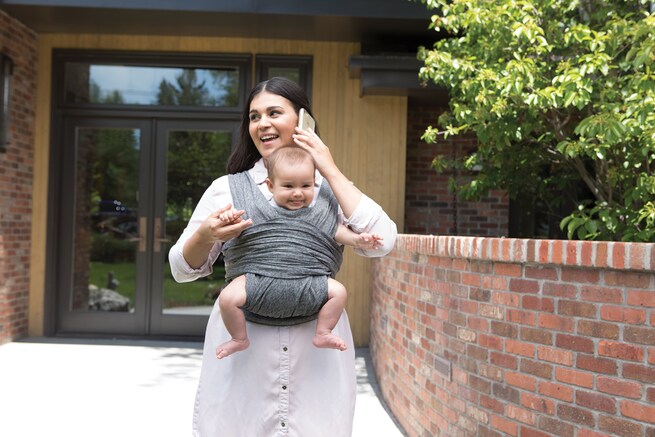
With the advent of things such as social media, it seems some women manage to balance their mom life and social life perfectly. But, for most of us, whose lives are often blended, and there’s no such thing as work/life balance.When you’re a mom, you’re not a balancing act. Not going, going, going. Not figuring it out as you go along. And never not loving every minute of it.
In fact, according to a survey conducted by Boppy*, 67 percent of parents strongly agree that when you’re a parent, you’re always balancing it all and taking it one day at a time. That doesn’t mean you can’t have the best of both worlds though. A few simple tricks can make that balancing act flow more smoothly leaving you feeling more fulfilled and less stressed.
Here are 5 time-saving tips for moms on the move.
1. Have A Designated Area For Kid Stuff
You’ve managed to organize every room in your house, but it always seems the kids’ things are the ones that get the most scattered. Create separate bins for each kid and place them in the room where you want their various items.
For example, it makes sense to have all shoes, coats, etc. by the front door, so all the items to get out the door are right there. And when they come home, you know all the items go right back to that same bin. As the kids get older, it also helps them know where the toys and their other items go when they are done playing with them. Who says you have to run around the house cleaning up? Set up one system to save you time every day.
2. Wake Up 30 Minutes Earlier
How many times have you wished there were more hours in the day? That’s a common feeling among many moms. So, make more hours! By setting your clock just 30 minutes earlier (preferably before the kids get up), you can set aside that time to do “you” tasks. That could include spending quality time with your significant other, getting in an at-home workout, meditating, or enjoying scrolling through Instagram with a cup of coffee.
Consistently setting aside time for yourself is important to remind yourself you’re not just a mom and want to do things sans children. This daily ritual is perfect for making sure you’re getting that time without sacrificing your sleep. Then, of course, you can always set aside more time throughout the week or month for even more “you” time.
3. Bring The Baby With You
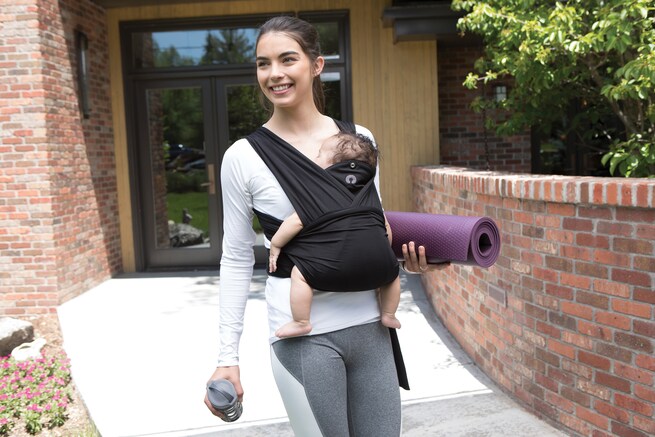
So often moms separate their lives into “mom life” at home and their “other lives” outside the front door. But who made that rule? In case you didn’t know, babies are portable. When you want to go out somewhere, just bring the baby with you. And using products like the Boppy™ ComfyFit™ Baby Carrier make it easy.
Inspired by yoga apparel, the lightweight carrier moves with you. The secure one-click fastening system and wide shoulder straps allow you to be comfortable and know your baby is safe while you’re out and about. The Boppy ComfyFit Baby Carrier has an intuitive and secure design that allows parents the freedom to bond with their baby without barriers, featuring a one-click fastening system, wide shoulder straps and an adjustable tie that easily transitions from parent to parent. The machine washable, soft fabric and spandex support an active lifestyle without compromising style. Bonus: the semi-structured hybrid carrier with an ergonomic seat features two carrying positions. Now you and your baby can explore the world together.
4. Cook Once, Eat Twice
Between worrying about your kids, getting the chores done, squeezing in a workout, and working, the last thing you want to do is cook a family meal every day. That’s why every mom should meal prep. You could approach meal prep two ways: spend one day cooking for the week or follow the cook once, eat twice rule.
With the weekly meal prep, you can set aside a few hours on Sunday to go grocery shopping and prepare batch meals. That means making a large container of brown rice, for example, baking a lot of chicken, and prepping any basics you will use during the week. You can even take it one step further and pre-package everything, so all you have to do is heat and eat.
If you’re not into setting aside an entire day, focus on creating meals that go the distance. When making dinner, make enough that it will cover another meal. Preparing for leftovers will reduce how much time you will have to spend in the kitchen on a daily basis.
5. Walk 10,000 Steps A Day
When you’re trying to juggle a lot of balls in one day, trying to workout can seem impossible. A simple, time-saving tip to make sure you’re at least getting something in each day is to focus on just walking 10,000 steps a day.
You can get a pedometer to track your steps, and it includes everything from walking out to get the mail to taking out the garbage to hopping on the treadmill. If you maintain a healthy diet, walking those 10,000 steps can help you lose up to a pound a week without ever hitting the gym.
In fact, the London School of Economics and Political Science found that people who walked briskly for at least 30 minutes a day weighed less and had lower BMIs than those who engaged in more intense gym sessions. Better yet, with the Boppy ComfyFit Carrier, you can go for a walk with your baby! So, focus on at least getting those steps in and get a more intense workout when you can.
Boppy empowers moms of all kinds and specifically with its new Boppy ComfyFit Baby Carrier launch campaign, #NeverNotAMom, featuring real moms. Check out their new video!

The idea of flying with children is probably the biggest cause of stress for traveling parents. No one looks forward to carrying a load of luggage through the airport with a tired and unhappy child (or children), and the prospect of keeping them seated, quiet and happy for hours can be frightening. While we can not promise that your children will not melt, our travel tips will help you optimize your air travel and keep everyone in a better mood. We also have useful tips to make traveling with babies easier.
♡ My favorite travel toys for newborns
Getting ready
The first step is to arrive early at the airport. It takes a long time to cross the airport and security in any circumstance and will not be able to make a last-minute escape to your door as you would without a child (or children) in tow. The additional time at the airport will give your child the opportunity to exercise (find an empty door area or ask if there is a playground at the airport) between the long car trip and the flights.When possible, register and secure your seat assignment online before leaving for the airport. Do not forget to print the boarding passes and put them in your carry-on luggage!
Be sure to pack your cargo (including any phone number you need) and a map of your destination in your carry-on baggage. There is nothing worse than struggling to find your hotel with tired children in tow.
Do you need help packing your carry-on luggage? Check out our useful Carryon packaging list for babies, toddlers, and children
Arrive at the airport
Unless you live in an urban environment with good public transport, getting to the airport can present a challenge. The need to carry a car seat makes it difficult for a friend to leave or take a taxi, but it can cost a fortune to park at the airport.Consider parking outside the airport for short trips. A transportation service will pick you up in your car and leave you near your airline.
For longer trips, look for a local car service that provides a seat for the car. They should pick it up at home and leave it at the curbside counter. The cost is usually a little cheaper than the taxi service (partly because the meter is not running while collecting the last items and closing the house). If you choose to do this, book in advance and request a seat for the car at the time of booking. Call and reconfirm both the time and the car seat before traveling. You will also want to confirm what type of car seat you need. Wait for the driver not to install the seat for you (for reasons of responsibility), but if they do, you should verify the installation yourself to make sure it has been done correctly and that the seat is secure.
Can not find a limousine service that provides car seats in your area? Some car services will use your seat and store it until you pick it up for the return trip.
Explain to your child exactly what will happen. It can be scary for them to put their shoes and lovey on the conveyor belt and say goodbye to them.
Put everything on the safety belt and take off everyone's shoes before taking your child out of the stroller, then wait until you can put your child back in the stroller before picking up your other items.
If there is a family lane, use it! At most airports, the family lane has additional agents to help families pick up their belongings and, often, there is a little extra space where children can wear shoes.
Keep your tickets and identification easy to find until you board the plane. Babies and children are not required to have an ID for domestic flights in the USA. UU
If you are traveling with a baby, it is often easier to pass security with the baby in a metal-free sling. They can sleep undisturbed, and on my most recent flights I have not been asked to remove the baby from the sling. I have been told that this is the new regulation, but it seems to vary from one airport to another. Keep in mind that you will be asked to remove the baby from the sling before takeoff.
For more tips, see our step-by-step guide to Breezing Through Airport Security With Kids.
To learn about the latest safety rules related to children and their food and beverages, visit TSA Traveling with Children
After security
Your children have cooperated (or not) with much madness until this moment. Hopefully you have left enough time at the airport to take a break and attend to your needs now. Get them a snack (not sugar), change diapers or visit the bathroom, and spend a little time exploring with them. Now is also the time to dress your children to sleep on the plane.
- Many airports have a play area (check the airport's website or ask a gate agent for details), but if yours doesn't there is often an empty gate area to play in. Even though you’re probably exhausted from packing and getting through security you need to resist the urge to keep your child seated or contained in their stroller while you rest. There will be plenty of time to sit down once you board.
- Use this time to pick up any drinks or snacks you will need on the plane. Not all flights carry milk, and airplane tap water is not considered safe to drink (especially for children or babies). Furthermore bottled water supplies can be limited. Buy what you need now.
- If you were not able to get the seat assignments you wanted or want to know whether there is an empty seat available for your lap infant, now is a good time to talk with the gate agent.
- The gate agent can also give you a gate-check tag for your stroller.
- If your child was recently potty trained, put them in a diaper for the flight. You'll be glad you have it if the flight is delayed on the tarmac or if there is turbulence in flight.
- Wondering about nursing or pumping in the airport? Here are some Practical Tips for Breastfeeding and Pumping in an Airport
As flight time nears, stay close to your gate and listen for the agent to announce pre-boarding. It is helpful to get on the plane first and get yourself organized before everyone else is trying to board. If you are able to split up, send one person ahead with the carryon baggage and car seats while the other parent stays with the kids. This way the first parent can get everything organized and ready without the distraction of kids, and the kids get a little bit more time to move freely. The second parent and kids can be among the last people to board.
Once on-board, make sure that you keep any items you need during takeoff or the beginning for the flight within your reach while seated.
If you gate check your stroller, make sure it has a tag with your name, address, and phone number and get a claim ticket from the gate agent. At the bottom of the jetway, collapse your stroller and remove any loose items. Do not expect that the airline personnel will know how to collapse and stow your stroller without damaging it. It is also a good idea to put your stroller in a plastic or cloth bag to protect it from damage. Most airlines consider strollers to be fragile items and will not reimburse you if they are damaged or destroyed.
If you expect your child to sit in their own seat during takeoff, discuss your expectations before the final seatbelt warning. You don’t want to be one of the handful of families each year who delay (or are removed from) flights because their child refuses to be belted into their seat.
Flight Delays with Kids
Here are some ideas for dealing with a flight that has been delayed after boarding.
- If the plane door has not been closed yet, ask whether you can let your children walk and play on the jetway. Flight staff are often cooperative (they don't like crying children either.) Try walking your children up and down the aisle.
- Get your children involved in some positive play with the neighbors in front of and behind you. (Peekaboo is hard for even the most stoic travellers to resist). They'll be a lot more understanding when your children have a difficult time later if they've seen them being cute.
- Even though you're frustrated, try not to let your kids know it. They'll only pick up on your mood.
- Resist the temptation to keep your kids (temporarily) quiet with juice or sugary treats, it will only make them harder to manage later. High protein snacks (especially ones that take a while to eat) are a great choice though.
- Engage your kids in quiet play. If they're old enough, try making up stories about why the flight is delayed (maybe squirrels in the cockpit?), where the plane should go instead, or make a list of things you would pack if you were staying at your destination for a year.
- For more ideas, check out our blog article on Surviving Flight Delays With Kids
Takeoff
Babies and young children do not know how to clear their ears to reduce the pressure during takeoff and landing. Unless your child is asleep, you will need to help them. For older children, gum is a good aid. For babies, nursing, a bottle, or a pacifier will work. In addition to helping with ear pressure, milk also acts as a mild sedative, so feeding your child can set the stage for drifting off to sleep.
If your child is tired, consider going through as much of your sleep routine as possible during takeoff (reading stories, singing quietly) and tell them that you’ll be sitting for a long time, so this is a good time to sleep. Young babies often sleep well in flight with the motion of the plane and the engine noise providing a very soothing environment.
In Flight
Set expectations about what behavior you expect before your child gets into trouble. Acknowledge that it’s really hard to sit still for so long and tell them that you know they can do it and that you will help them when it gets difficult. Remind them about all the fun things you will get to do when you land. Here are more Tips for Keeping an Active Child Calm on a Plane
You need to make your travel toys last, so try not to bring them out until your child asks for them or gets bored. They’ll probably be amused for quite a while with just looking around, talking to the neighbors, and having some one-on-one time with you. When you do get out toys, get out one at a time so that each has a period of novelty. It’s fun to have some (or all) wrapped as gifts. The wrapping won’t add significantly to your load, but it will provide a little extra excitement and entertainment for your child. When possible, choose toys that work well together. For example, I might start with a Playmobil person and horse. When that gets boring, I could add a stroller, or a wheelchair or a car to the mix.
Not sure what to put in your in-flight busy bag? Check out our helpful tips for:
Keeping a Child Occupied on a Plane
Ten Great Travel Toys You Already Have at Home
Our Favorite Travel Toys
In turbulence, the FAA recommends that "Adults holding infants should provide as uniform support as possible to the infant's head, neck, and body, and lean over the infant to minimize the possibility of injury due to flailing."
Baby noses sometimes get stuffy during flight. Consider bringing along some saline drops (available at the pharmacy) and a small syringe. You can drip a few drops into baby's nose during or after the flight to clear things up. Some sources also say that cleaning the nose helps reduce baby's chances of getting sick Others recommend using expressed breast milk (if you have it) because it is non-drying and antibacterial.
Will you be nursing on the plane? Check out our helpful guide to Nursing and Pumping On an Airplane
Landing
As with takeoff, you’ll have to help your child with pressure in their ears during landing (if they are awake). If you need milk, water, or juice, get it from the flight attendant before the landing process begins.After landing, it is easiest to wait until the other passengers have de-planed to gather your belongings and children. Despite your best efforts, some of their toys will be scattered on the floor or around the seat, and you won’t want to lose anything. If you’ve gate checked a stroller, it won’t be available immediately anyway, so you might as well wait in your seat instead of at the bottom of the airplane door. Best of all, not being part of the crush of passengers exiting the plane will also give your children a chance to peek in the cockpit.

Parents, we caught him; nap time is time to rest, and we're not just talking about your little one. It offers both an opportunity for the baby to recharge and a period of tranquility and tranquility during the day. Win-win! But when your little bud has trouble falling asleep, it can be more than frustrating. Are you doing something wrong? Trust us, probably not you. All the parents have been there, and some days are more difficult than others. The important thing is that you have the resources you need! Here are some simple tips and tricks that you can use to ensure your baby's best naptime.
The power of Routine
Around three months, your baby's daytime dream begins to adopt a pattern: this is the perfect time to start a nap routine! Work with your natural rhythm to obtain a schedule that best suits your needs and reinforce through repetition: the same time, the same duration every day. This will encourage appropriate naps because the baby's body will know when it's time to sleep.
Tucker 'Em Out Before Tucking'Em In
Throw that Lil 'baby out! During waking hours, make sure you are fully occupied. We are talking about strolls in strollers, colorful toys and lots of interaction. When you give the baby's brain many different stimuli to experience, indirectly you are preparing them to rest later in the day. And this, of course, comes with the additional benefit of bonding with your little one: singing to them, bouncing them and keeping them busy. It will really be worth it during the rest time.
Create the perfect space to sleep
Make sure you have the best possible sleeping space so that the baby can catch the healthiest ZZZ! The room where you sleep should be reasonably dark and cool, simulating the night so that it is easier to sleep. Control noise and keep the room quiet. If that is not possible, many babies respond favorably to white noise, as it blocks high-pitched sounds and provides them with a nice and equal spectrum of sound to lull them into you can easily find a white noise simulator on YouTube that can be useful!
Go with the Nap flow
Remember, your child grows and changes constantly, and that means your nap schedule will do the same. If your little one is constantly fussy around nap time and is not willing to sleep, it could be an indicator that their needs are changing! It's nobody's fault, it's just time to do a little nap routine. But is it a change in the baby's needs or the regression of the dream? Before making major changes, visit sites such as babysleepsite.com or babysleep.com and do some research.

We have always known that a good night's sleep makes us feel very good. But now, thanks to innumerable studies, we are beginning to understand exactly how bad for us a bad dream can be.
Chronic sleep deprivation and poor sleep patterns can contribute to anything from depression to diabetes, obesity and heart disease.
Unfortunately, this knowledge was not available for the baby boom generation. Sleeping for them was often seen as something to omit. And burning the candle at both ends was often seen as the norm rather than the exception.
As they move between 50 and 60 years and begin to look towards their retirement, many have developed sleep habits so poor that it can be difficult to make the most of the freedom that life after work will offer.
For any sleepless baby boomer who reads this, below are 3 super quick tips to sleep better.
1. Maintain a regular routine at bedtime
We are creatures of habit and our body loves, I mean love, routine. Going to bed at the same time every night and respecting our circadian rhythms, helps our bodies to think when to enter a state of drowsiness.
2. Go for a light diet
Too much artificial light at night wreaks havoc on the production of melatonin in our bodies, the hormone that controls our body's clock and tells us when to sleep.Anything that mimics daylight, such as too bright bedroom lights or the unpleasant blue light emitted by our laptops and smartphones is a problem. The solution is simple: replace bright lights with lamps or dimmers and prohibit screens one hour before bedtime.
3. Make it darker
When the bedroom light is turned off, the room should be completely dark. As simple as that. If the light pollution seeps from the side of the curtains, it's time to get new curtains.If that sounds a bit expensive now, opt for the low-cost alternative and wear an eye mask. They may not be the most fashionable but they are effective. And sleeping in a properly dark room will have an immediate impact on both the amount and quality of sleep an individual receives.
There you have it, three simple and easy to implement sleep hacks that will help you drop and stay asleep longer.


